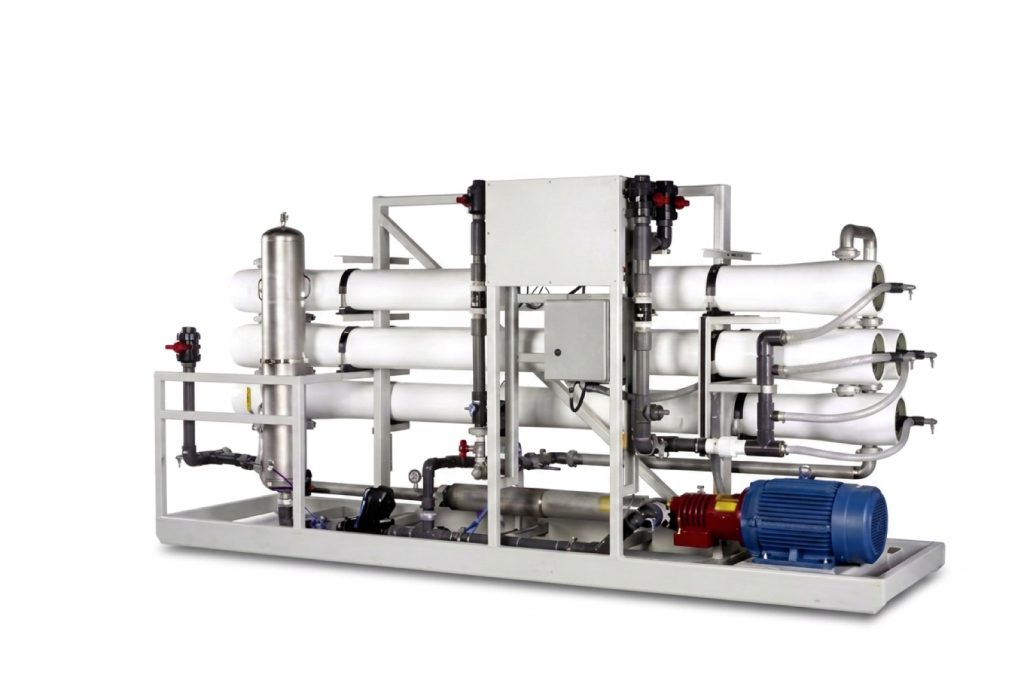
Reverse osmosis (RO) pre-treatment is the set of filtration and conditioning steps applied to feed water before it reaches the RO membranes. Because RO membranes are designed to remove dissolved solids — not suspended solids, chlorine, or scale-forming hardness — proper pre-treatment is essential to protect the membranes, maintain performance, and extend system life. Purecowater supplies RO pre-treatment equipment and complete systems matched to your feed-water chemistry.
Why RO Pre-treatment Matters
RO is designed to filter out dissolved solids, not suspended solids. Colloidal material, bacteria, and suspended solids will block the feed channels of an RO membrane and cause fouling. Pre-treating with the right equipment and chemicals increases membrane life, and in the long run pretreatment saves money and ensures RO reliability. Skipping or under-sizing pre-treatment is one of the most common causes of premature membrane failure.
Common RO Pre-treatment Methods
- Multimedia / sediment filtration — removes turbidity, suspended solids, and colloidal material that foul membranes.
- Activated carbon filtration — removes chlorine and chloramines, which can oxidize and permanently damage thin-film composite membranes.
- Water softening or antiscalant dosing — controls calcium, magnesium, and other scale-forming hardness to prevent scaling on the membrane surface.
- Cartridge pre-filtration — typically 1–5 micron filters provide a final barrier for fine particulate just ahead of the membranes.
- Iron and manganese removal — oxidation/filtration where source water contains elevated metals.
- pH adjustment — optimizes membrane performance and scaling control for specific feed chemistries.
The right combination depends entirely on your source water, so a current water analysis of all feed sources is the starting point for any pre-treatment design.
Water Temperature and System Design
Feed-water temperature has a direct effect on RO design. Warmer water has lower viscosity, so a higher-temperature system is designed for lower pressure and a smaller pump. Colder water has higher viscosity, so a lower-temperature system is designed for higher pressure and benefits from a larger pump. If your water temperature varies by 10 °C or more, adjust pressure to maintain consistent permeate flow — a Variable Frequency Drive (VFD) is highly recommended to manage this automatically.
Multiple Sources or Changing Water Quality
Do you draw from multiple wells, or does your water quality change seasonally? Variable feed conditions make pre-treatment design more critical, not less. A water analysis of all sources lets us design pre-treatment that handles the full range of conditions your system will see — rather than just the best-case sample.
Get Help Specifying RO Pre-treatment
Purecowater can help you select and size the right pre-treatment for your reverse osmosis system — from sediment and carbon filtration to softening, antiscalant dosing, and VFD-controlled pumping.
Designing or upgrading an RO system? Request a quote with a water analysis of your sources and our team will recommend the right pre-treatment.